Outline:
During my seven-day stay in Siem Reap, Cambodia, one of the things I knew I couldn’t miss was exploring the ancient temples of Angkor.
For me, Angkor had always seemed like a magical place filled with fascinating history, magnificent architecture, and mysterious stories from the past. As someone who enjoys discovering new places and learning about different cultures, visiting these temples was an experience I was really looking forward to.
I decided to spend three days exploring the Angkor temple complex. Although Angkor Wat is the most famous temple, there are many other incredible temples scattered throughout the surrounding area, each with its own unique character and history.
I quickly discovered that three days wasn’t enough to see everything! Nevertheless, I managed to visit several remarkable temples, experience their different atmospheres, and learn more about Cambodia’s fascinating history.
In this blog, I’ll share my three-day journey through Angkor, including the temples I visited, my personal experiences, and some practical tips that might help you plan your own adventure.
So, let’s begin!
Before You Visit Angkor: Tickets and Planning
Before exploring the temples, I purchased a three-day Angkor Pass through the Angkor Pass app, which is available on the App Store and Google Play Store.
I paid US$62 for my pass. One thing I appreciated was that the three-day pass could be used over a seven-day period, meaning I didn’t have to visit the temples on three consecutive days.
The pass was especially useful because I wanted to explore at my own pace rather than rush through every temple in a single day.
There are different pass options available, including one-day, three-day, and seven-day passes. If you’re planning to visit several temples, I recommend checking the current ticket prices, validity rules, and official purchasing information before your trip.
Most of my temple visits took place during the daytime. Opening hours can vary by location, so check the schedule for any temples you particularly want to visit.
One important tip: Keep your Angkor Pass accessible throughout your visit, as you may need to show it at checkpoints.
With my ticket ready, it was time to explore one of Cambodia’s most extraordinary historical treasures!
Day 1: Discovering Angkor Wat
My First Visit to Angkor Wat
My first day was dedicated entirely to Angkor Wat, the temple I had been most excited to see.
I had arrived in Siem Reap very early in the morning after taking a sleeping bus from Phnom Penh. I was already tired from the journey, and I had spent part of the previous night exploring the city, so waking up early enough to watch the famous sunrise wasn’t going to happen this time!
Instead, I decided to take things slowly and visit Angkor Wat in the afternoon.
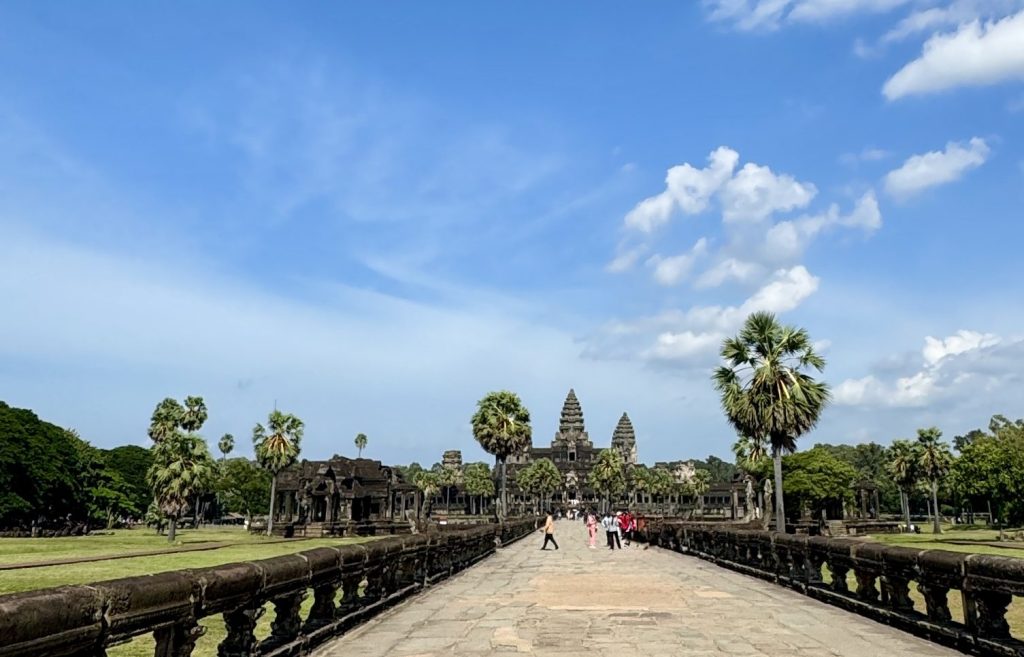
At around 2:30 p.m., I took a tuk-tuk to the temple and asked my driver to drop me off near the West Gate.
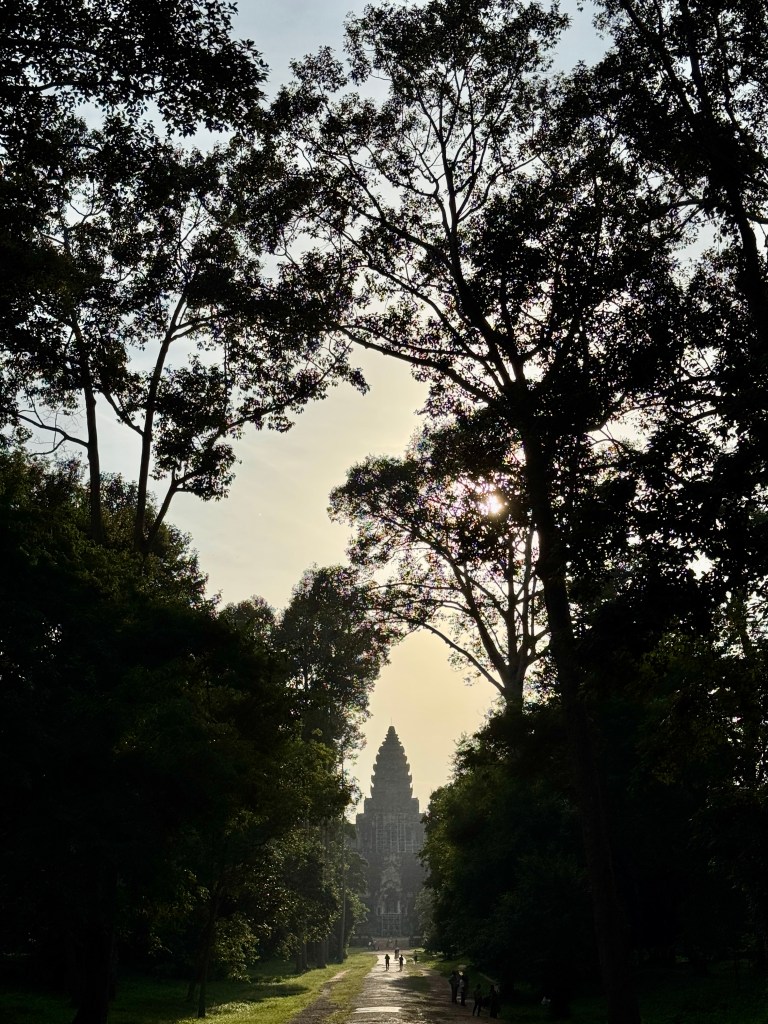
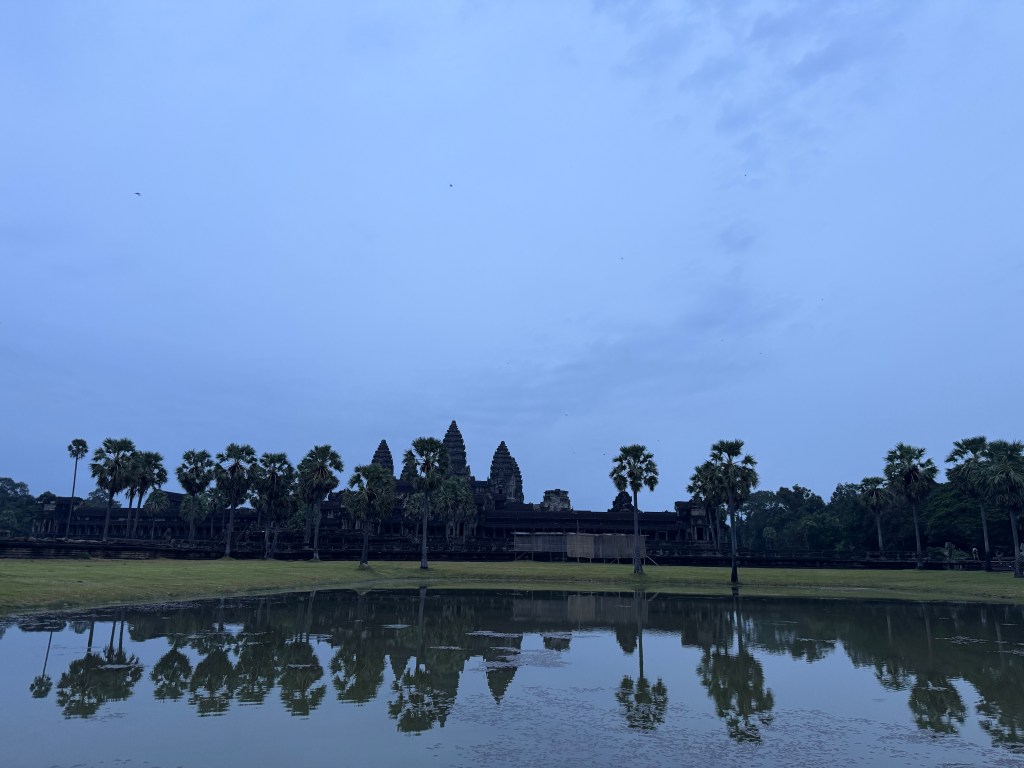
Even before entering the temple, I could feel how special this place was. Angkor Wat is enormous, and seeing its iconic towers in person was very different from looking at photographs online.
A Little History About Angkor Wat
Angkor Wat was built in the early 12th century during the reign of King Suryavarman II. It was originally dedicated to the Hindu god Vishnu before gradually becoming an important Buddhist site.
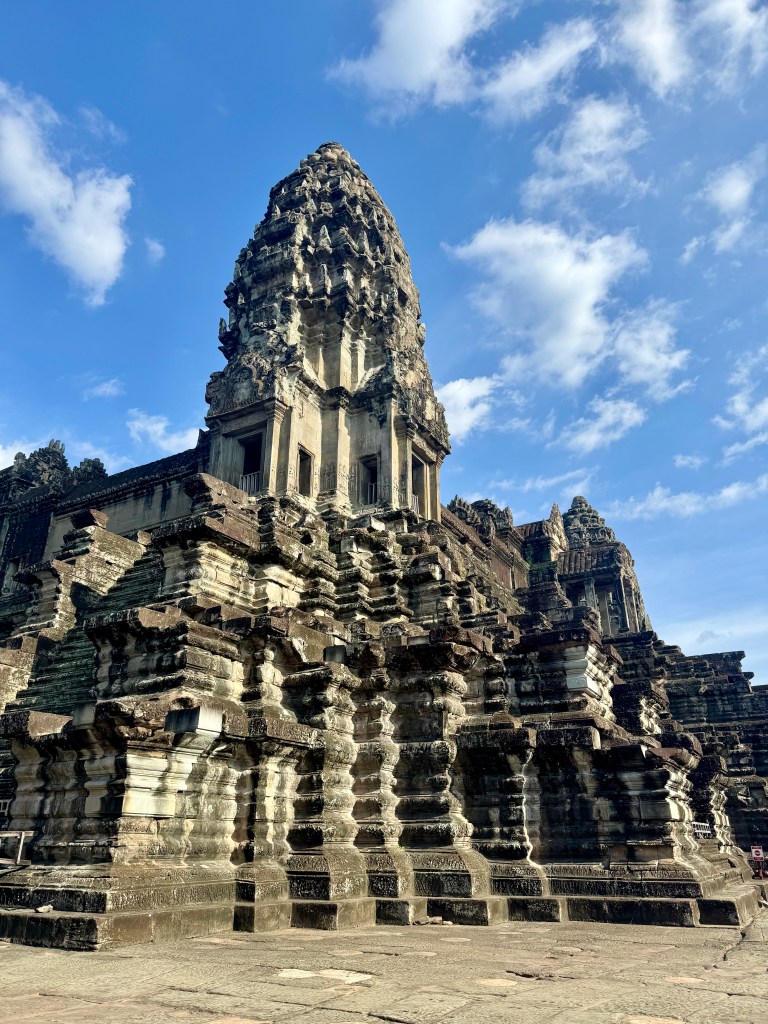
The temple’s five towers are designed to represent Mount Meru, the sacred mountain believed in Hindu and Buddhist cosmology to be the center of the universe.
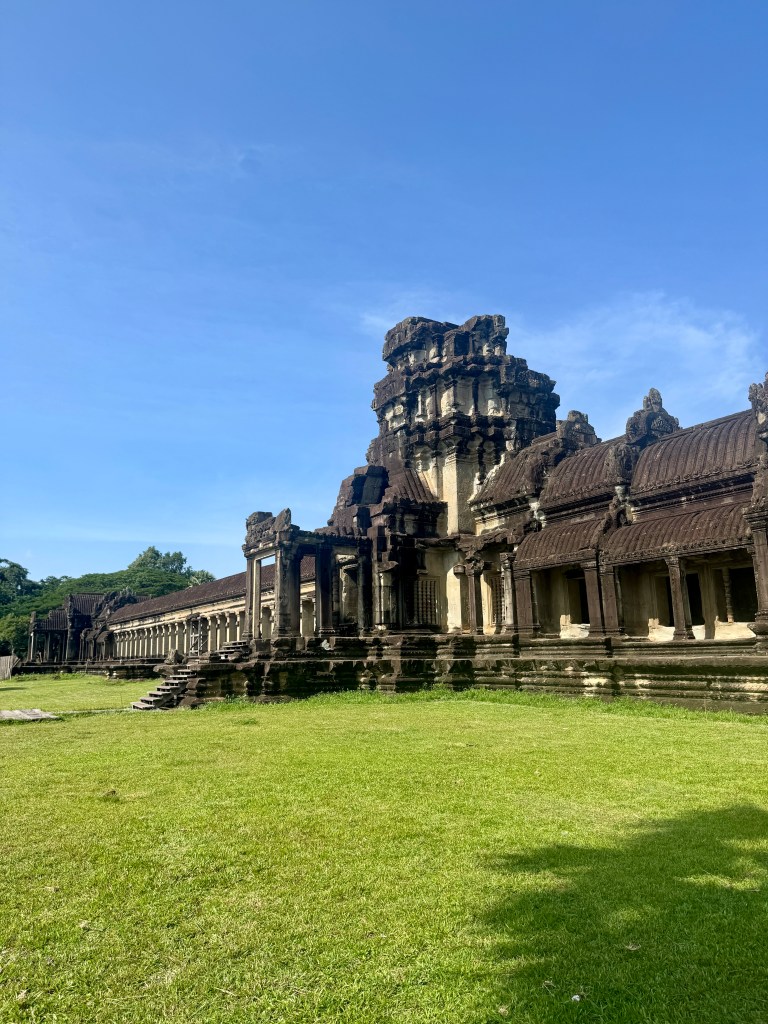
As I walked around the complex, I was amazed by the detailed stone carvings, impressive architecture, and sheer scale of the temple.
There were so many places to stop for photographs. I also noticed visitors wearing traditional Cambodian outfits and professional photographers helping people capture their special moments.
Although it was hot, I enjoyed taking my time to explore and appreciate the surroundings.
Exploring the Temple Grounds
One thing I quickly learned was that visiting Angkor Wat involves a lot of walking. The grounds are extensive, and some areas have steps, so comfortable shoes are essential.
The afternoon heat was intense, and I was glad I had brought water. If you’re visiting, I strongly recommend wearing sunscreen, bringing a hat, and drinking plenty of water throughout the day.
While walking through the forested surroundings, I even spotted a red squirrel! It was a lovely little surprise and reminded me that Angkor isn’t just about ancient architecture; it’s also surrounded by nature.
I continued exploring until later in the afternoon, when I made my way toward a spot where visitors gather to watch the sunset.
Watching the Sunset at Angkor Wat
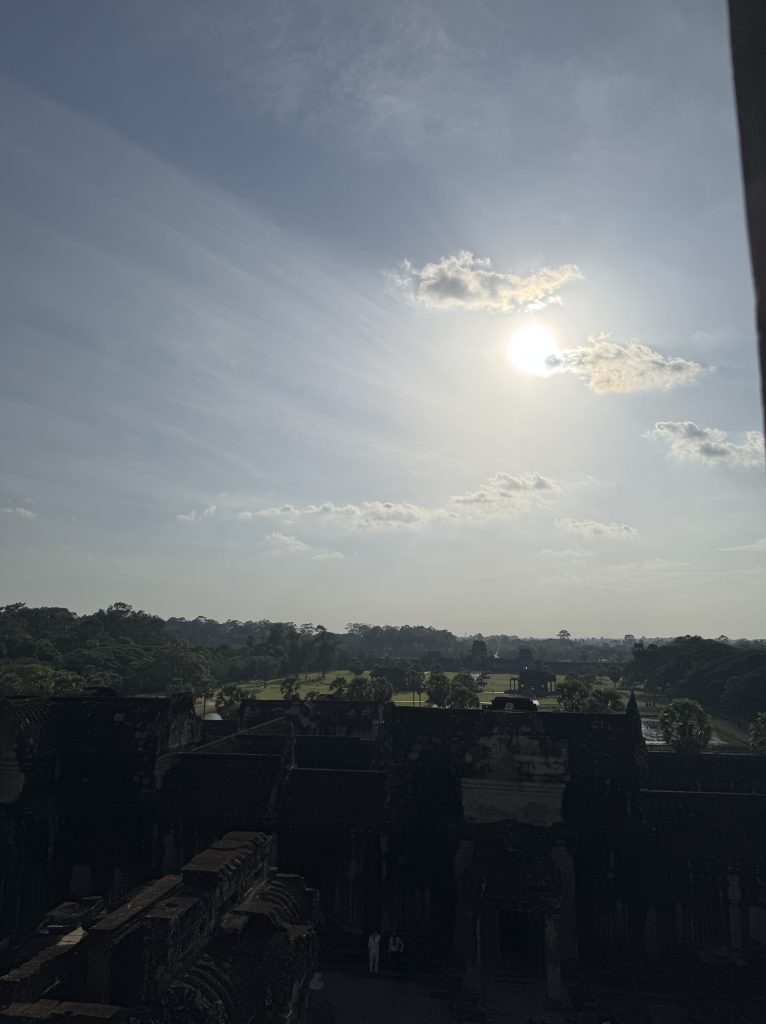
One of the highlights of my first day was staying until sunset.
Even though I hadn’t managed to wake up early for sunrise, I was grateful that I could experience the temple in the afternoon and evening instead.
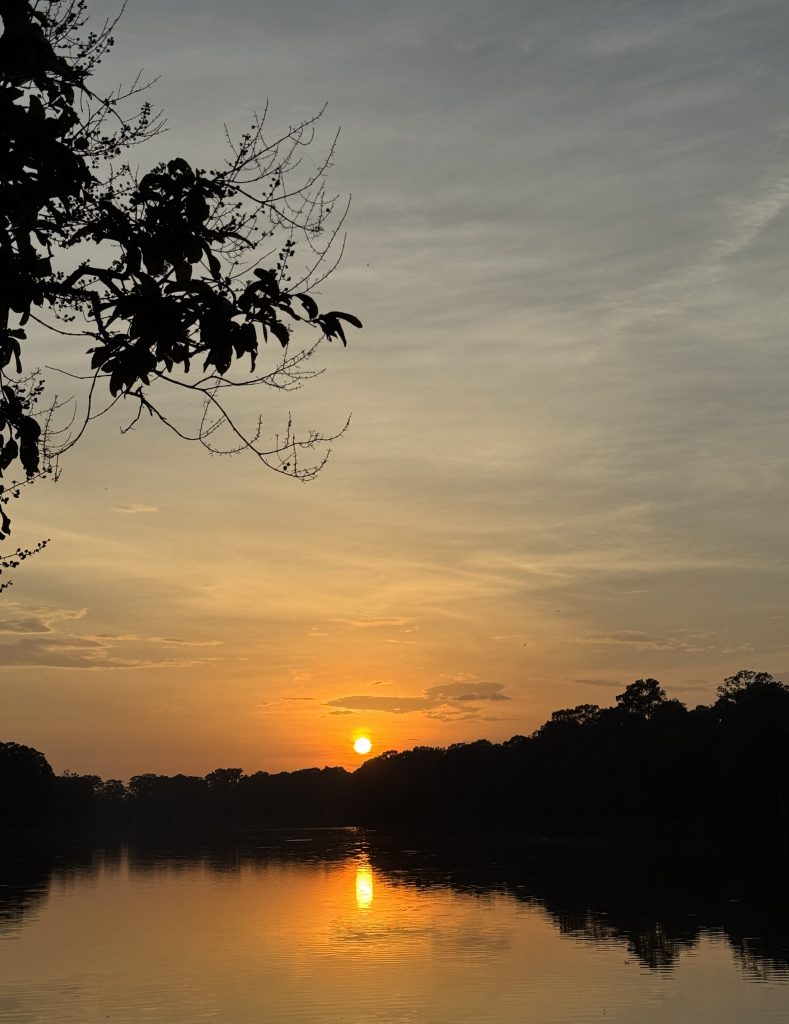
As the day slowly came to an end, the atmosphere felt peaceful and magical. After spending hours walking around the complex, it was wonderful to pause and appreciate the surroundings.
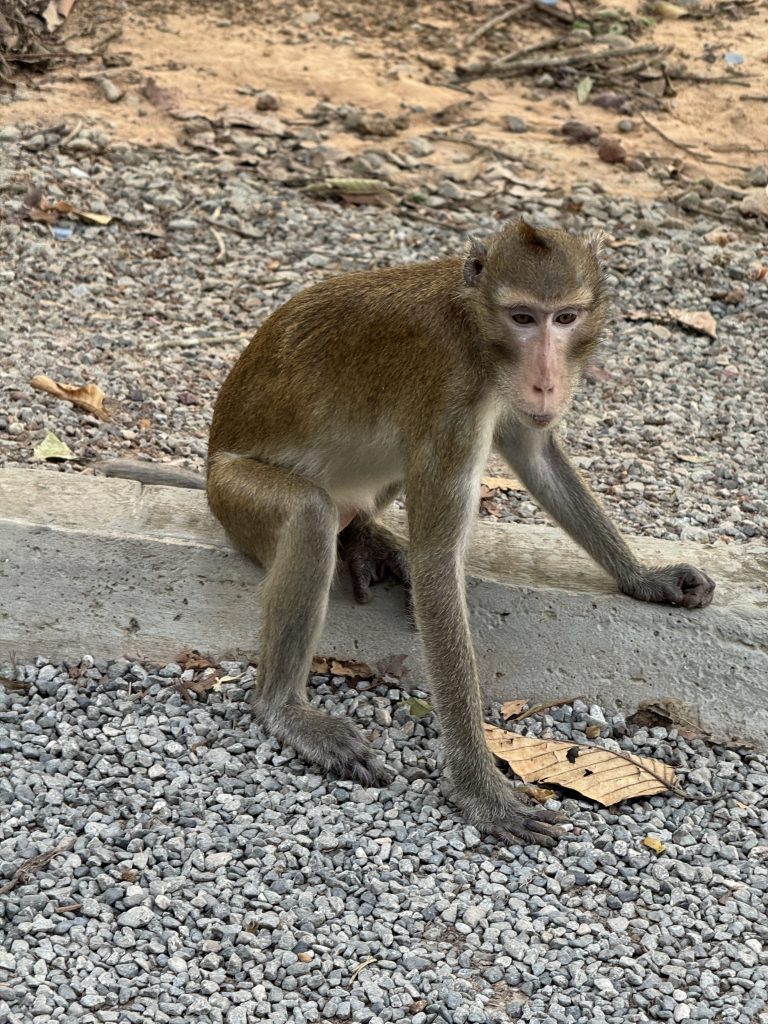
On the eastern side of the temple, I also encountered monkeys near the gate. They were interesting to observe, but remember to keep a safe distance and never feed or approach wild animals.
My first day at Angkor Wat was tiring, but it was also unforgettable. I finally understood why so many people consider it a must-visit destination in Cambodia.
Day 2: Exploring Bayon and Angkor Thom
Taking It Slow
After a full day of exploring Angkor Wat, I decided not to rush myself on the second day.
I slept in, enjoyed lunch, and stopped for coffee before heading out again.
Later, my tuk-tuk driver offered me a half-day tour to explore more temples around Angkor. I thought it was a great opportunity to discover places I hadn’t seen the day before, so I decided to go.
Our first major stop was Bayon Temple.
Bayon Temple: The Mysterious Stone Faces
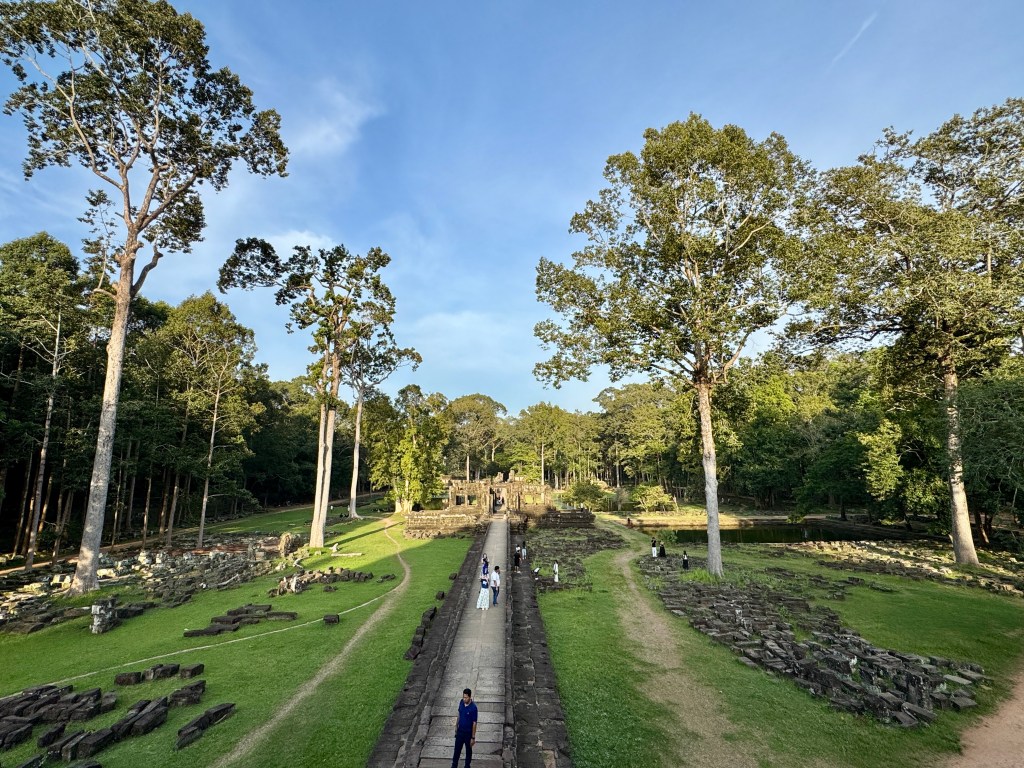
I arrived at Bayon at around 3 p.m.
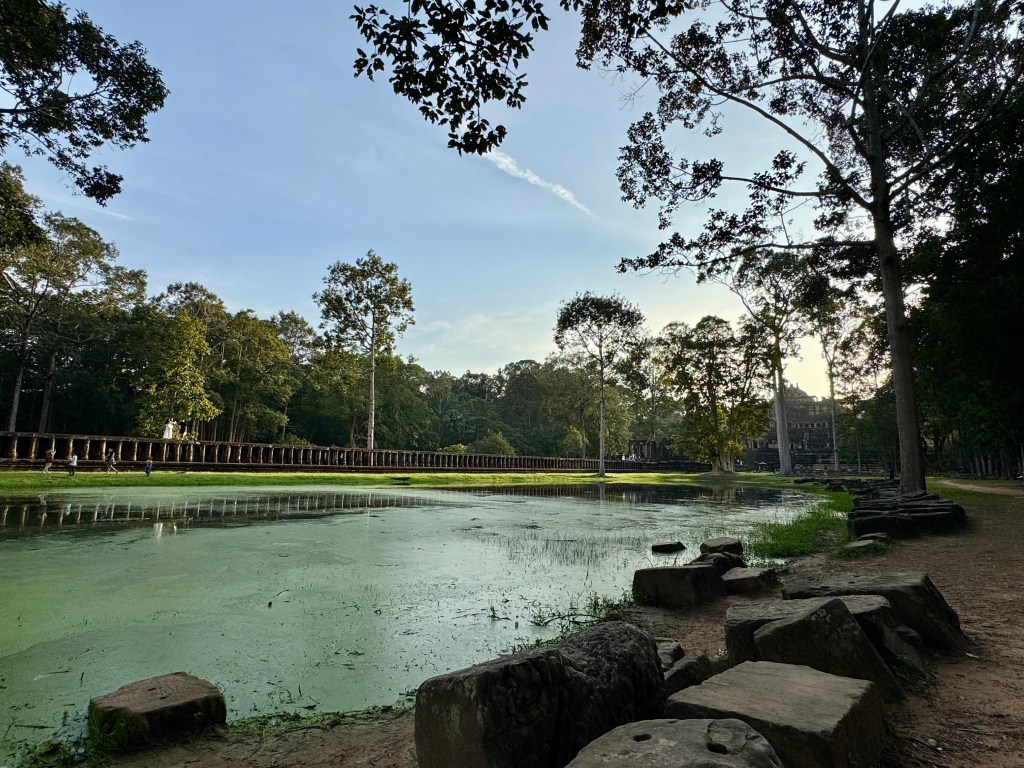
The entrance area was beautiful, and I immediately noticed how different the temple looked from Angkor Wat.
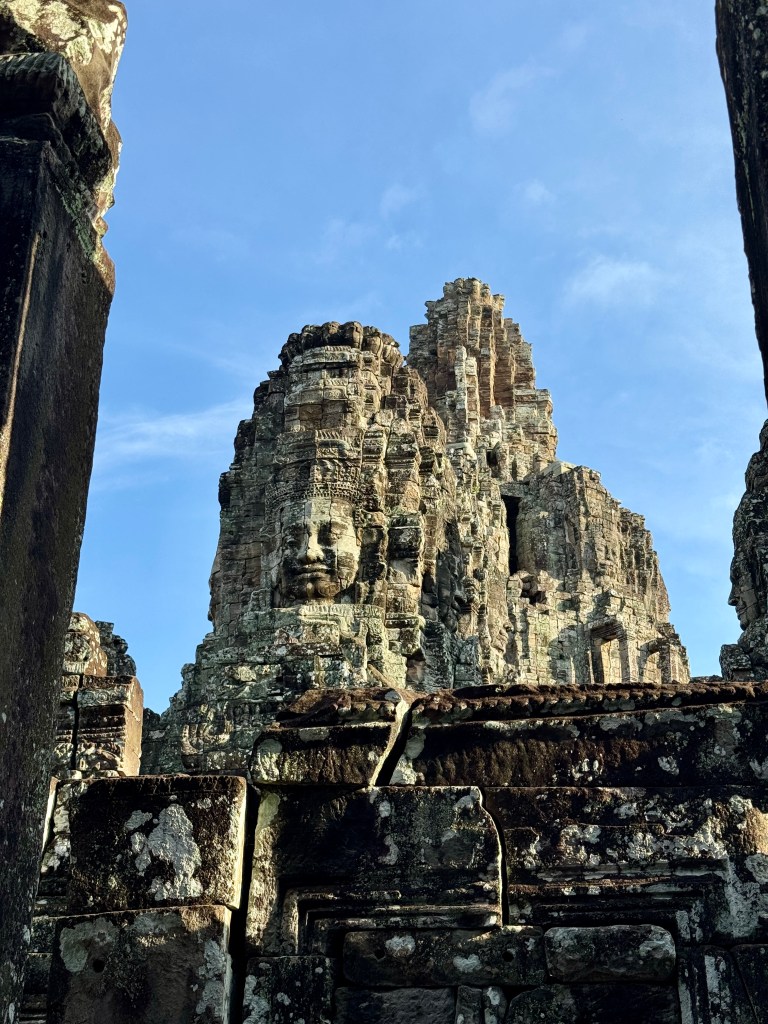
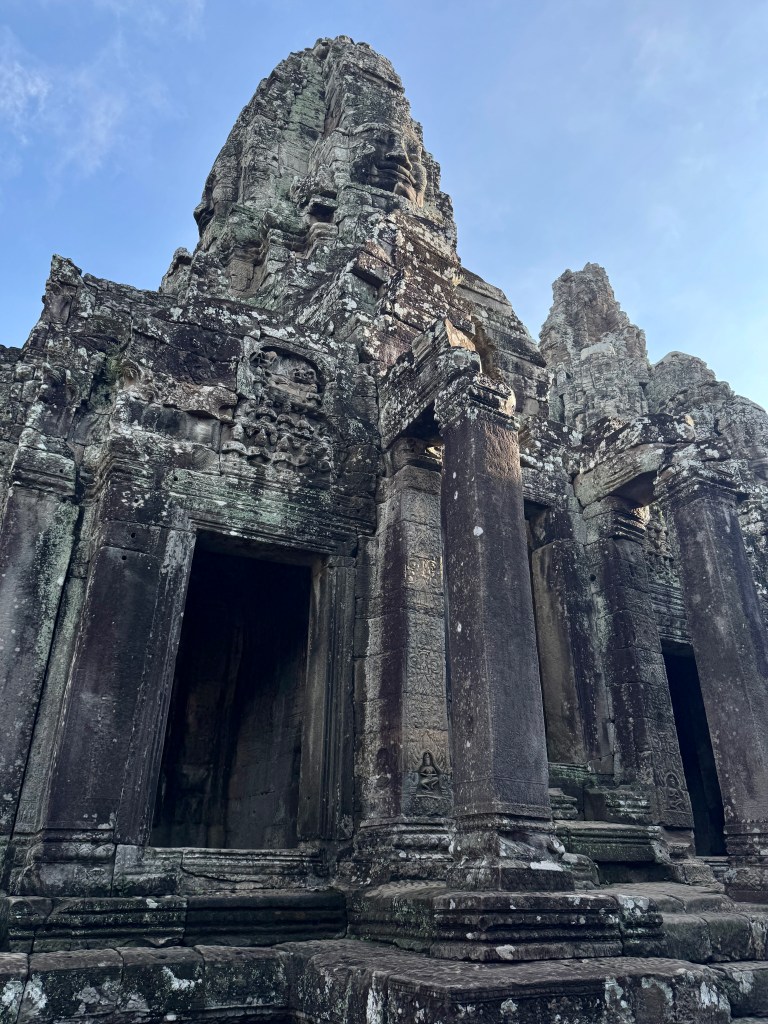
Bayon is famous for its enormous stone faces carved into towers throughout the complex. Their calm expressions give the temple a mysterious atmosphere, making it one of the most recognizable sites in Angkor.
The temple was built during the reign of King Jayavarman VII in the late 12th or early 13th century. It was originally associated with Mahayana Buddhism and formed part of Angkor Thom, the great walled city that served as the royal capital.
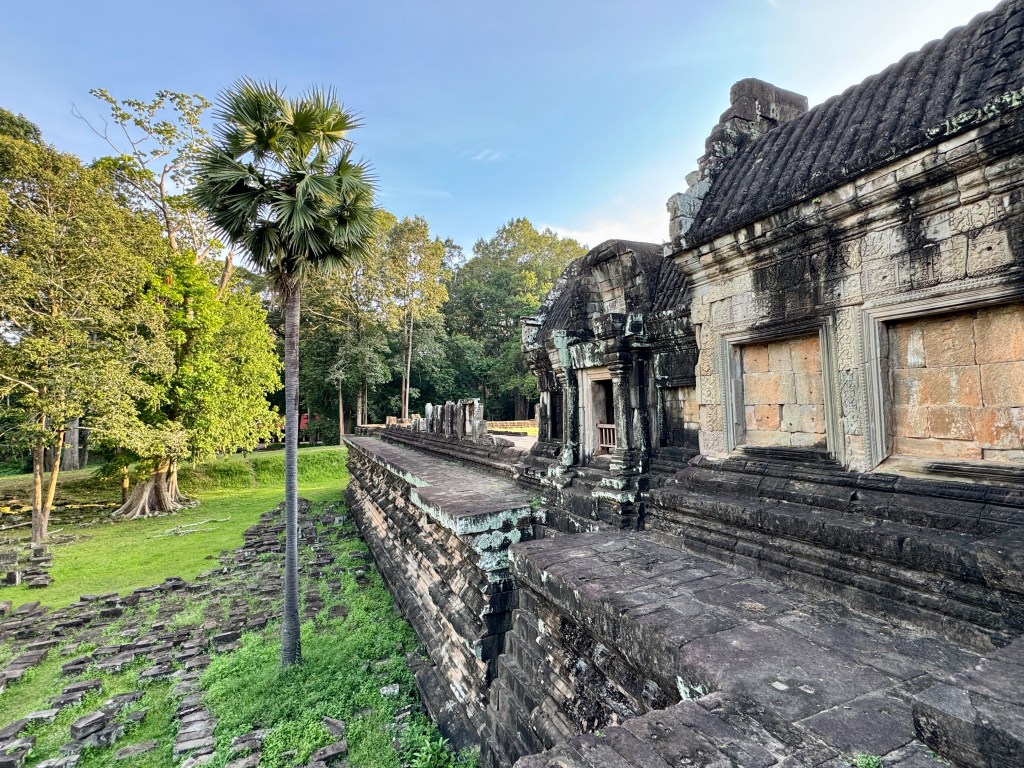
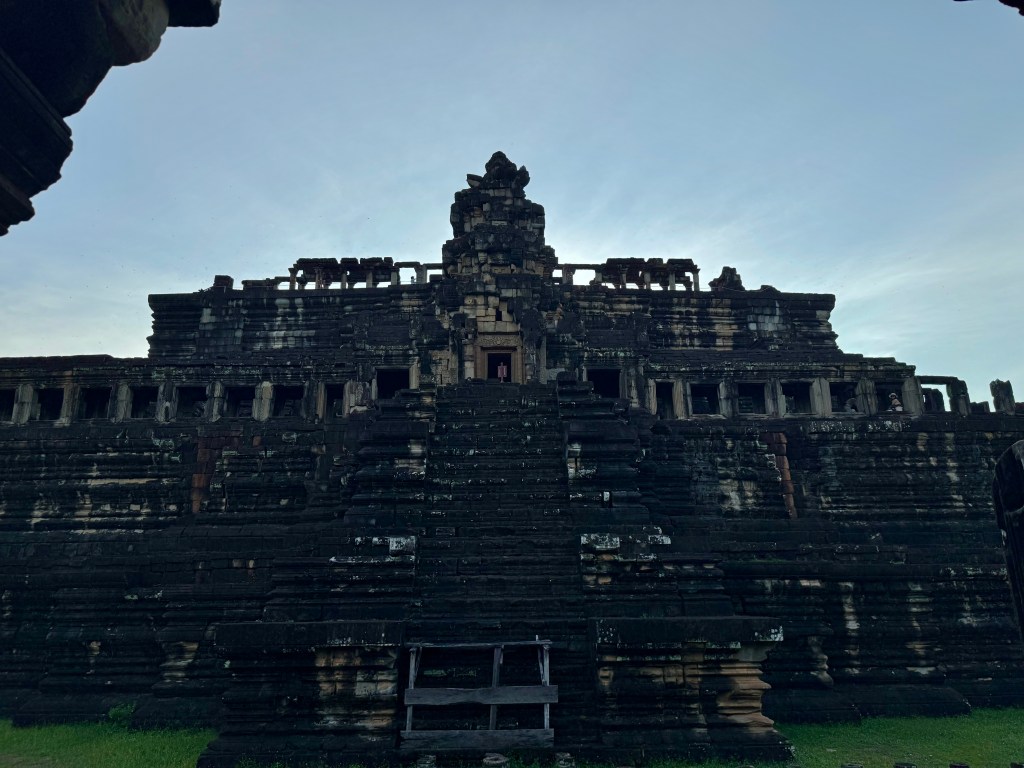
As I explored the temple, I found myself stopping frequently to take photographs. There were so many interesting angles, detailed carvings, and hidden corners to discover.
I also enjoyed looking at the bas-reliefs, which depict scenes of historical events and everyday life in the Khmer Empire.
Bayon quickly became one of my favorite temples. It felt different from Angkor Wat, and I loved the combination of history, architecture, and mystery.
Terrace of the Elephants
After Bayon, I continued to the Terrace of the Elephants, another impressive monument within Angkor Thom.
The terrace was used as a ceremonial viewing platform associated with the royal court. It was particularly connected with public ceremonies and processions.
Built and developed during the reign of Jayavarman VII, the terrace stretches for approximately 300 meters and is decorated with detailed carvings, including elephants.
Standing there, I was impressed by the size of the structure and the craftsmanship behind its decorations.
It was easy to imagine how this place might once have been used during royal events and ceremonies.
The terrace had its own charm, and I enjoyed taking a moment to appreciate its historical significance.
By the end of the afternoon, I had seen two more fascinating sites and learned even more about the ancient Khmer civilization.
However, there were still so many temples left to explore.
I decided that the following day would be my biggest temple-hopping adventure yet!
Day 3: Nine Temples in One Morning
My Attempt to Watch the Sunrise
On my third day, I finally convinced myself to wake up early for the famous Angkor Wat sunrise.
My alarm went off at 4:30 a.m., and by 5 a.m., I was on my way with my tuk-tuk driver.
We arrived at Angkor Wat at around 5:30 a.m., while the sky was still dark. There were already many visitors waiting to experience the sunrise.
I found a place to wait and watched the sky gradually brighten.
Unfortunately, I didn’t get the sunrise experience I had hoped for. By around 6:15 a.m., I realized that the view wasn’t going to turn out as I had imagined.
I felt a little disappointed because waking up that early was a challenge in itself!
Still, I reminded myself that I was fortunate to be there. Even without the perfect sunrise, seeing Angkor Wat in the early morning was a memorable experience.
Breakfast and Coffee Before the Adventure
After my sunrise attempt, I headed to a nearby Starbucks for breakfast and coffee before continuing my tour.
I needed the caffeine because the day ahead was going to involve a lot of walking!
My tuk-tuk tour continued through several temples around the Angkor complex. This time, I was determined to explore as much as I could before the afternoon heat became too intense.
Here are the temples I visited that day.
1. Preah Khan
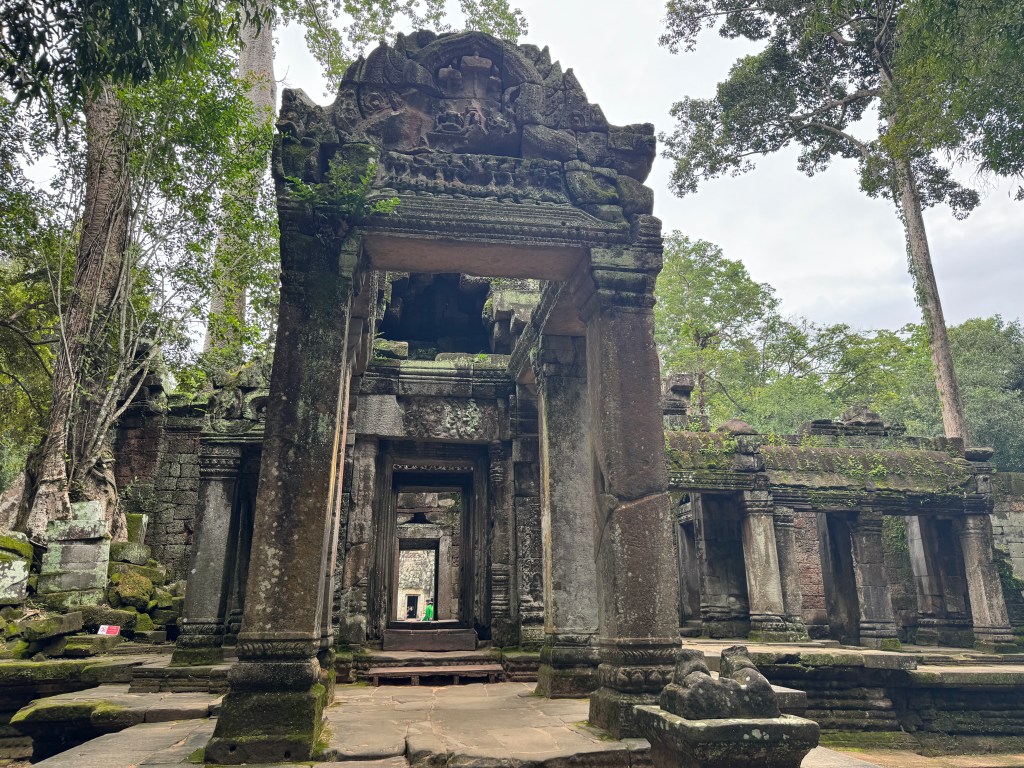
Preah Khan was built during the reign of King Jayavarman VII in the late 12th century. It was dedicated to his father and served as a major religious and administrative complex.
The temple is extensive, with corridors, courtyards, and stone structures that make it feel like a maze waiting to be explored.
I enjoyed discovering its different sections and imagining how active this place must have been centuries ago.
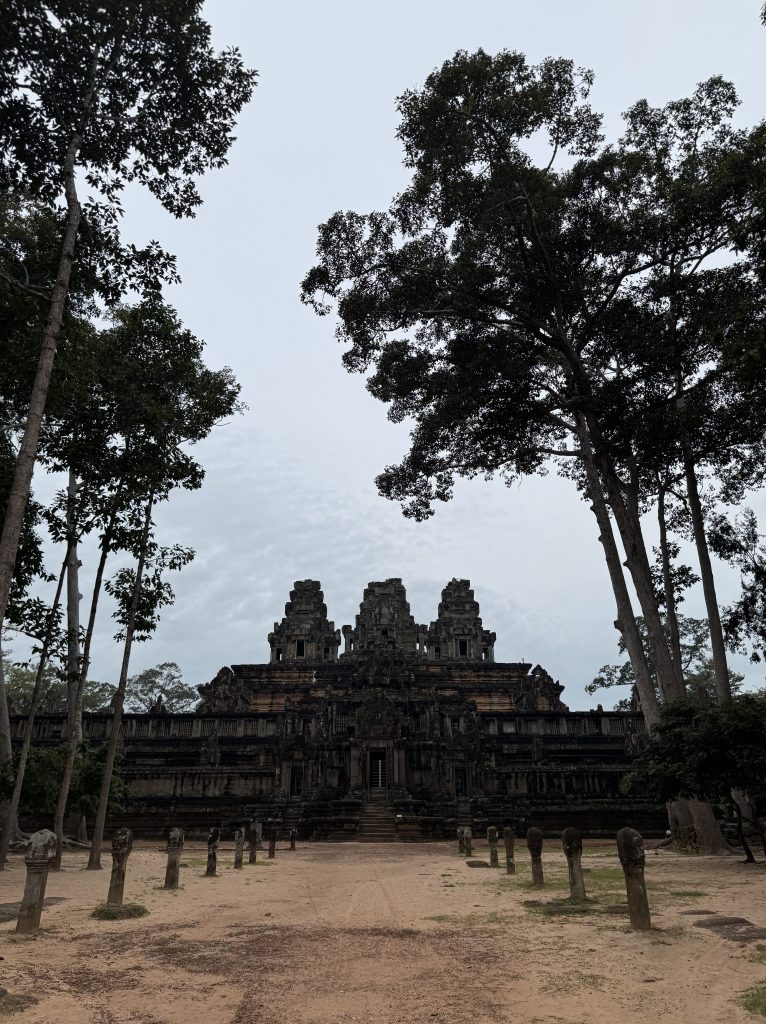
2. Ta Keo
Ta Keo has a very different appearance from some of the other temples I visited.
Construction began during the reign of King Jayavarman V, around the late 10th or early 11th century. The temple was dedicated to Shiva and is known for its imposing temple-mountain design.
Its tall, stepped structure makes it particularly impressive. Compared with temples covered in elaborate carvings, Ta Keo has relatively little decorative work, giving it a more solid and monumental appearance.
3. Ta Prohm
Ta Prohm was one of my favorite stops of the day and is actually my third favorite temple overall, after Angkor Wat and Bayon.
Built during the reign of King Jayavarman VII in the late 12th century, Ta Prohm was originally a Buddhist monastery known as Rajavihara.
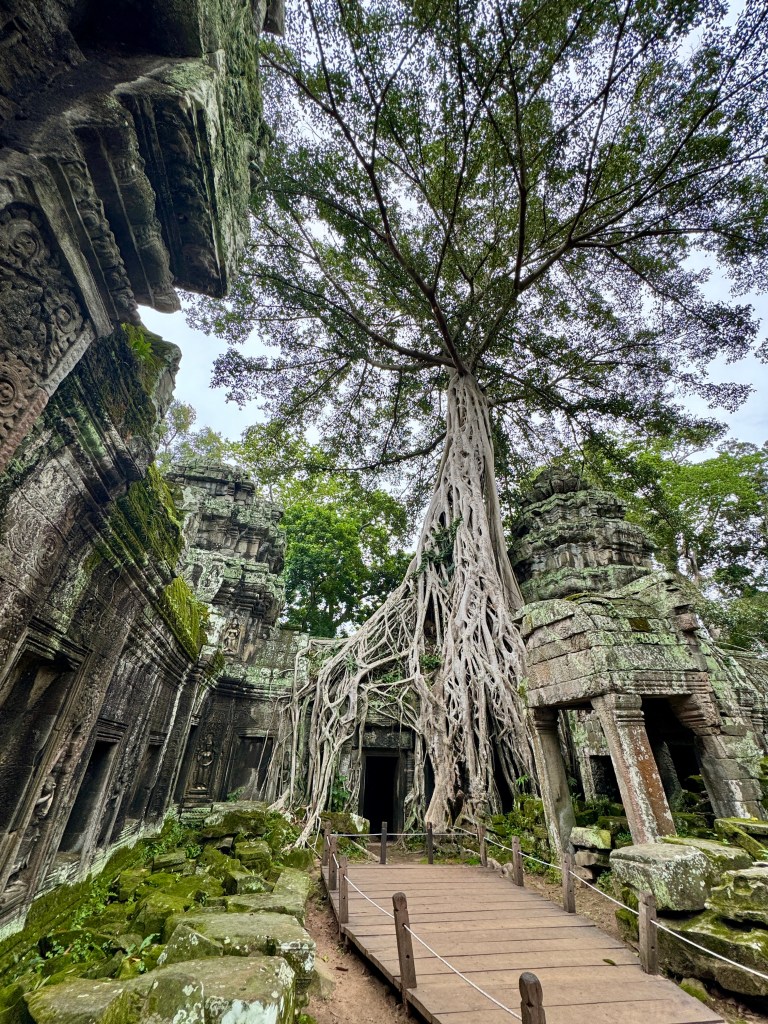
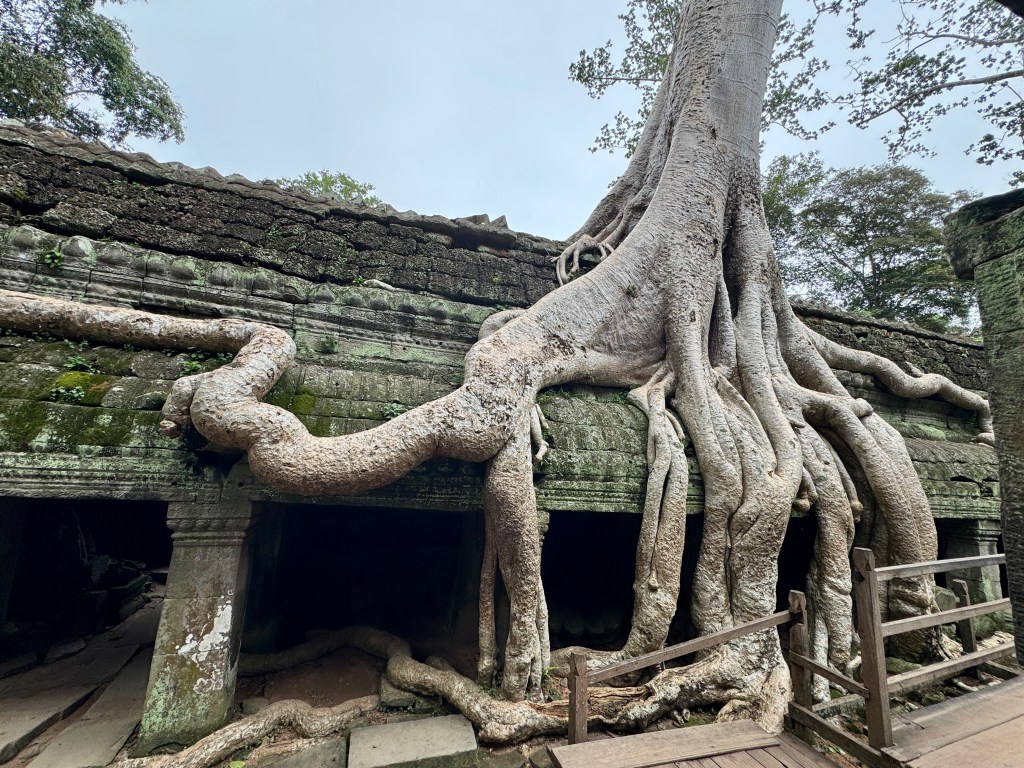
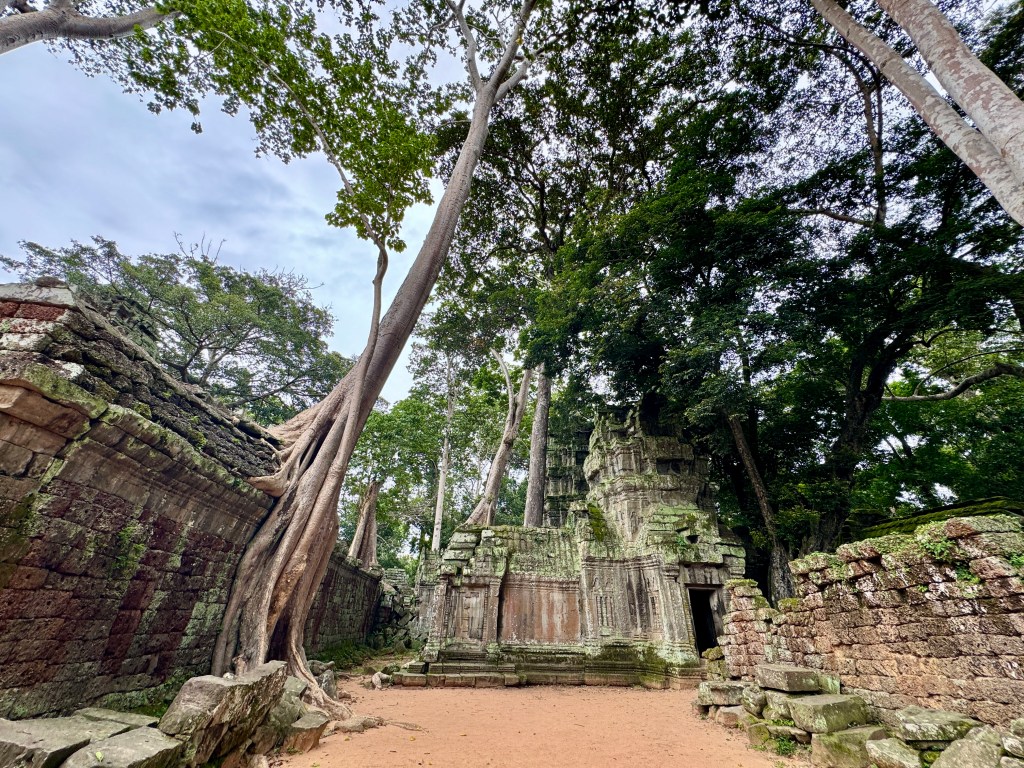
Today, it is especially famous for the enormous tree roots growing over and around its ancient stone structures.
Walking through the temple felt like stepping into another world. Nature and history seem to have become intertwined, with giant roots wrapping themselves around walls and doorways.
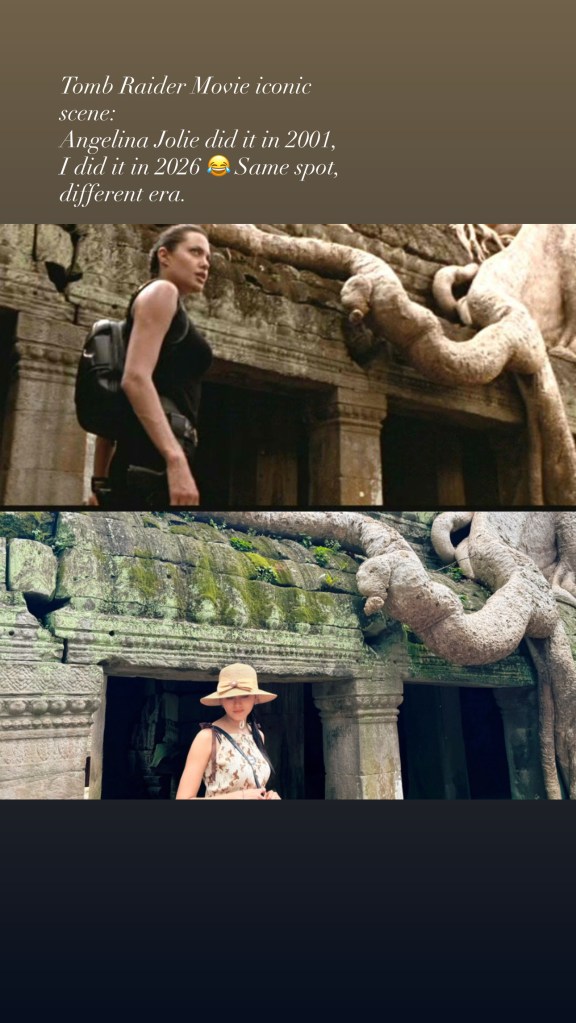
You might also recognize Ta Prohm from the 2001 movie Lara Croft: Tomb Raider, which helped make the temple famous among international visitors.
For me, Ta Prohm was one of the most memorable places on the entire trip. It was mysterious, beautiful, and unlike anywhere else I had visited.
4. Banteay Kdei
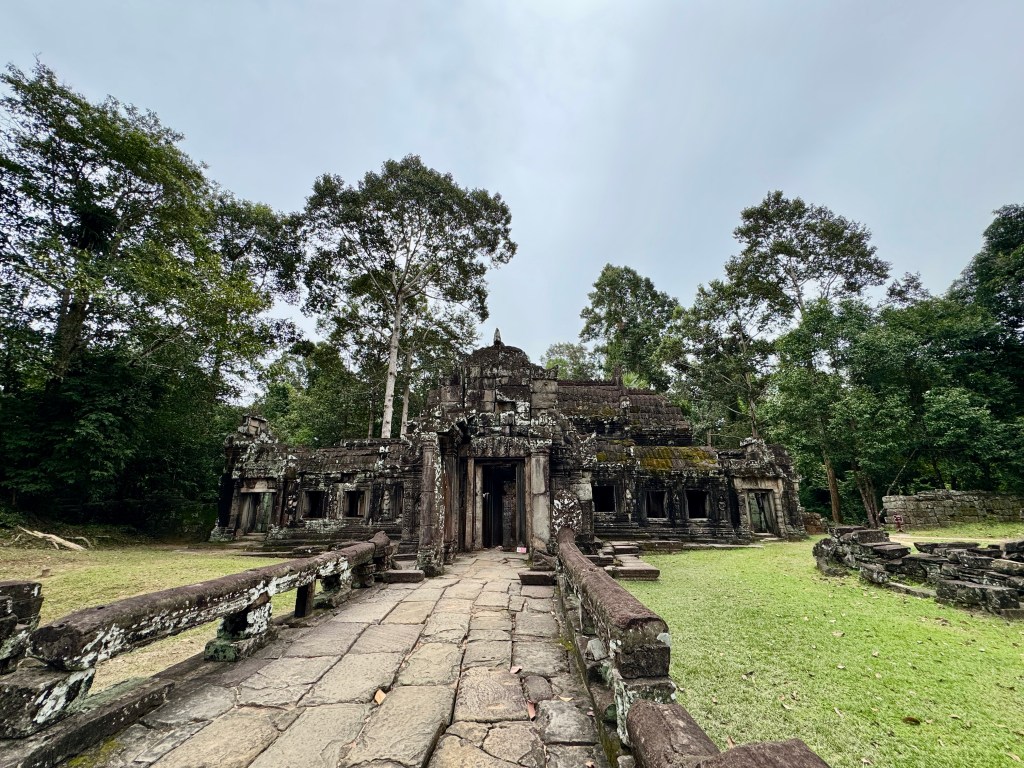
Banteay Kdei was another temple built during the reign of Jayavarman VII, around the late 12th to early 13th century.
Its name is often translated as the Citadel of Chambers, and the complex contains numerous corridors, galleries, and courtyards.
I enjoyed exploring the quieter sections of the temple and looking at the details carved into the ancient stone.
By this point, I was beginning to feel how much walking the day involved, but I was still excited to discover each new place.
5. Srah Srang
Srah Srang is different from the temples I had visited earlier because it is a large reservoir rather than a traditional temple complex.
The reservoir dates back to the 10th century and was later developed during the reign of Jayavarman VII.
Sometimes called the Royal Bathing Pool, Srah Srang is known for its peaceful setting and views across the water.
After exploring so many stone structures, it was refreshing to visit a place with a more open landscape.
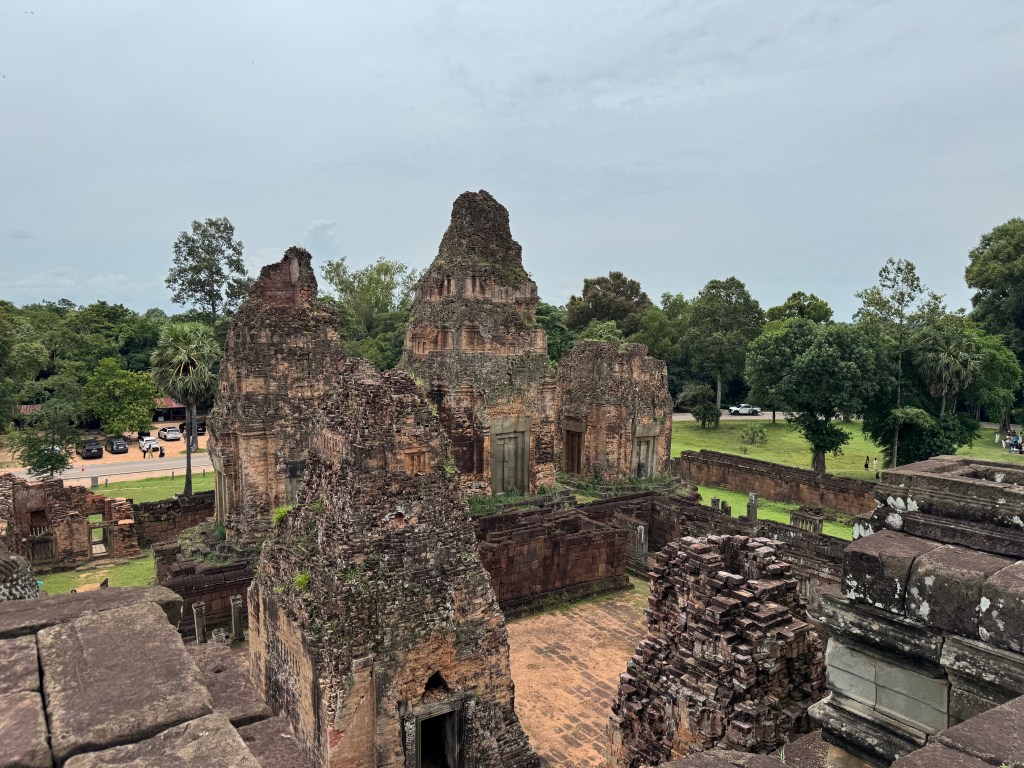
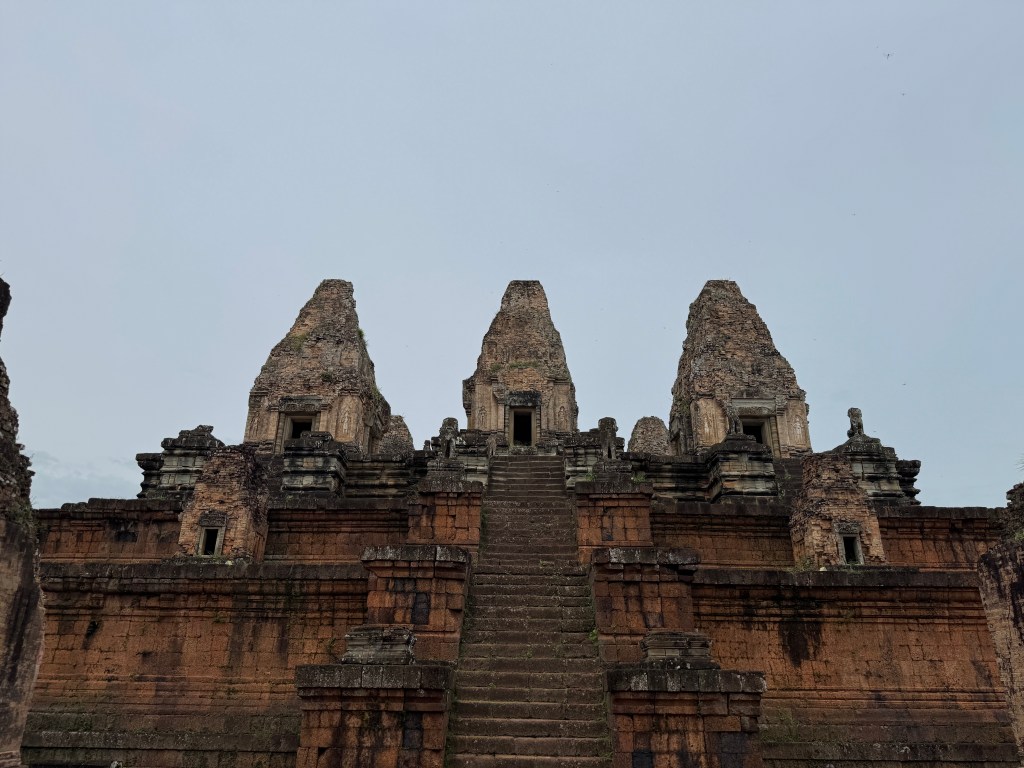
6. Pre Rup
Pre Rup was built in 961 CE during the reign of King Rajendravarman II and was dedicated to Shiva.
The temple is known for its distinctive stepped structure, which resembles a mountain rising above the surrounding landscape.
Its reddish brick and laterite stones give it a different appearance from some of the other temples around Angkor.
Pre Rup is also known as a sunset-viewing location, although I visited it during my temple-hopping tour rather than waiting until sunset.
I enjoyed seeing another example of how varied the architecture across Angkor can be.
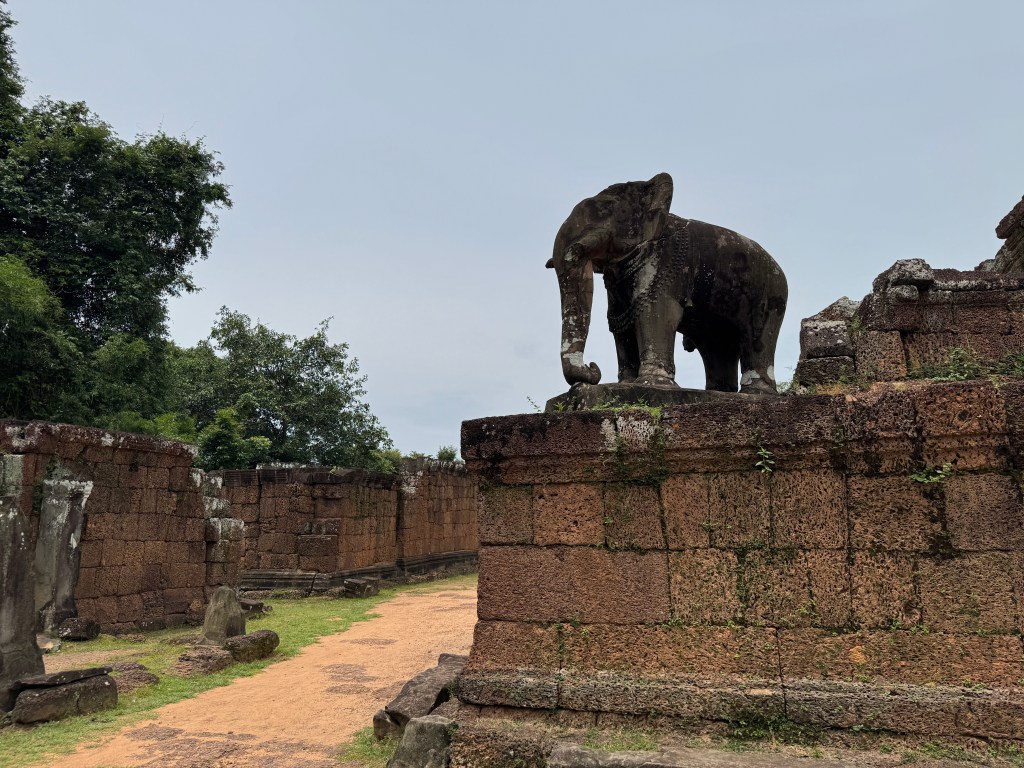
7. East Mebon
East Mebon was also built during the reign of Rajendravarman II.
When it was constructed, the temple stood on an island within the East Baray reservoir. Although the reservoir is no longer filled as it once was, the temple still offers a glimpse into the impressive water-management system of the ancient Khmer Empire.
One of its most distinctive features is the stone elephant sculptures positioned around the temple.
I found it fascinating that a place which now feels surrounded by land was originally associated with such a large body of water.
8. Ta Som
Ta Som was built during the late 12th century under King Jayavarman VII.
Although smaller than some of the major temple complexes, it has a special charm of its own.
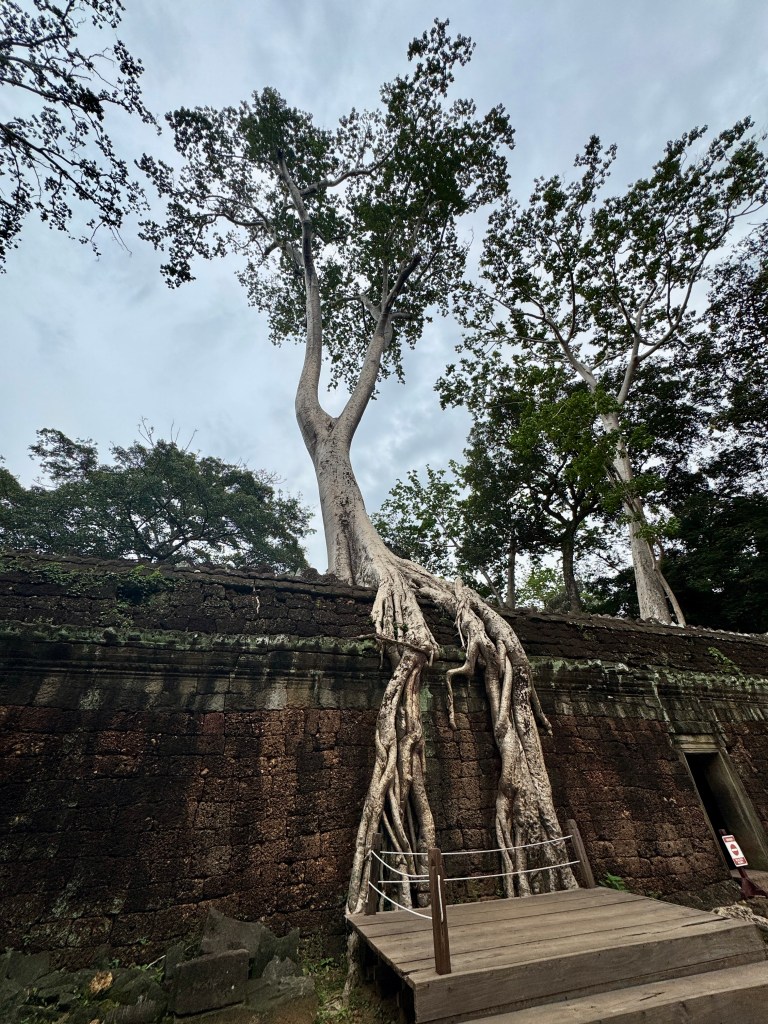
One of its most recognizable features is the eastern entrance, where a large tree has grown around the ancient stone structure.
Like Ta Prohm, Ta Som shows how nature has gradually become part of the temple’s appearance.
I enjoyed seeing how each temple had its own atmosphere, even when some of their architectural features looked similar.
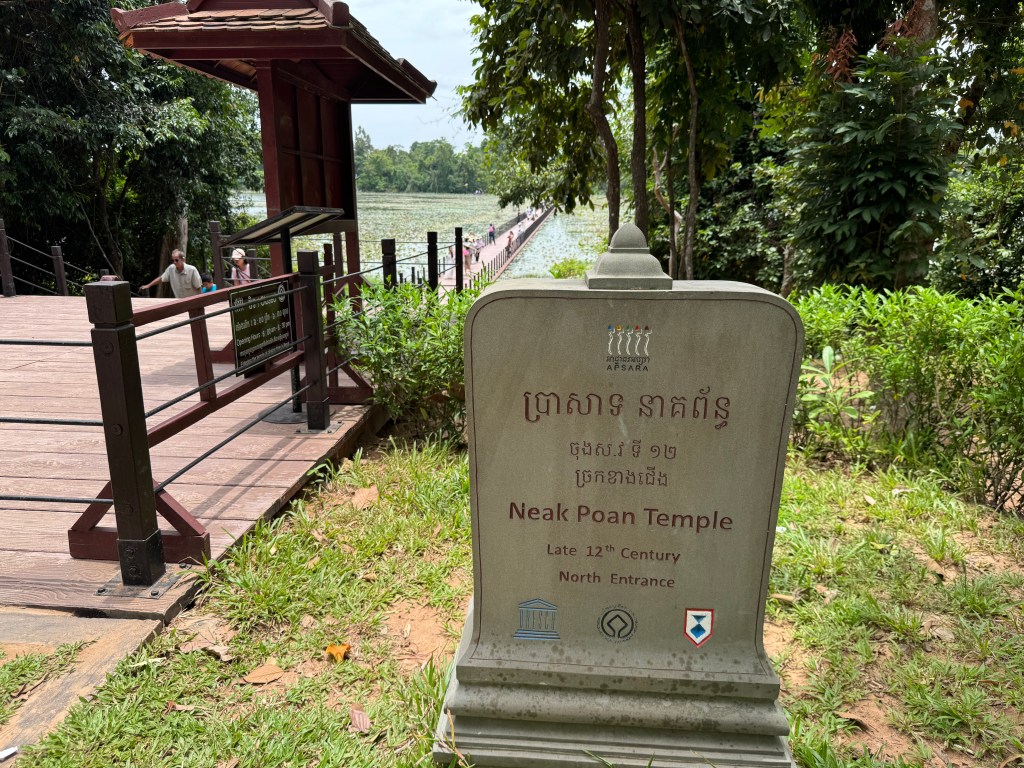
9. Neak Pean
My final temple stop of the day was Neak Pean, a Buddhist temple complex dating to the late 12th century and associated with Jayavarman VII.
The name is often translated as Entwined Serpents, referring to the serpent sculptures associated with the central structure.
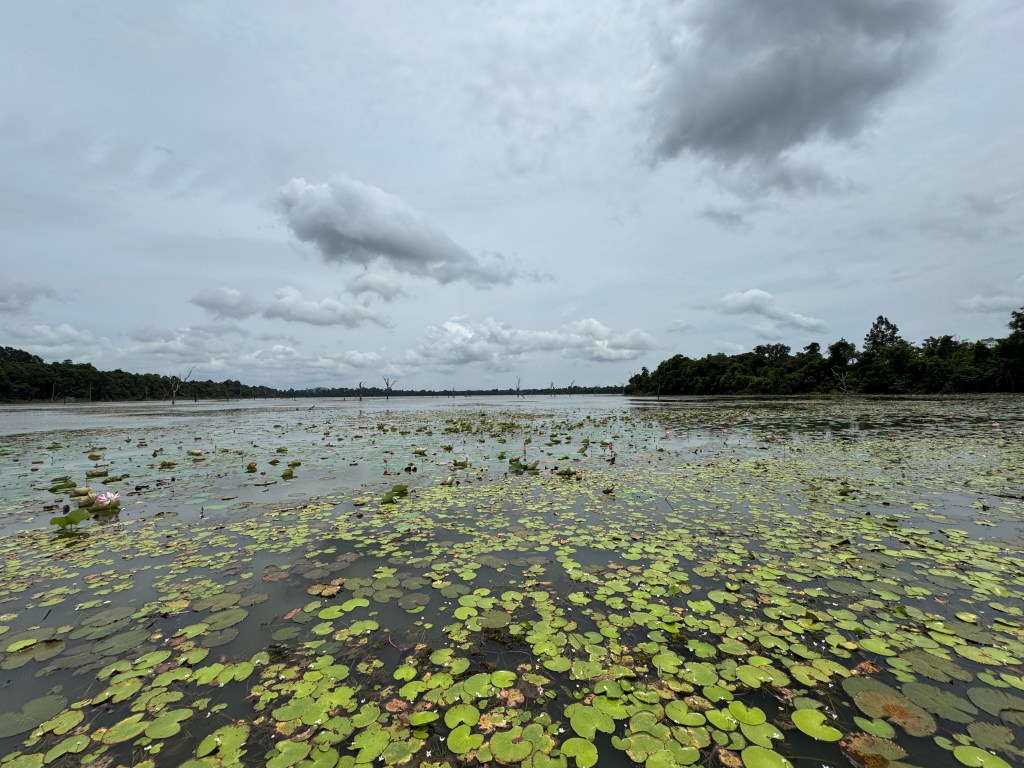
Neak Pean is especially interesting because of its island setting and its arrangement of pools. Its design is associated with sacred water and ideas of purification and healing.
After visiting so many temples, it was a fitting final stop for the day. It offered something different from the monumental temple mountains and intricate corridors I had seen earlier.
Nine Temples, One Exhausting Day
By the time I finished the tour, I was exhausted!
I had visited nine temples in one morning and early afternoon, and the amount of walking was much more tiring than I had expected.
Although I was happy to have seen so many places, I realized that exploring Angkor requires a lot of energy, especially when the weather is hot and humid.
Even after three days, I still hadn’t seen every temple I wanted to visit.
Rather than feeling disappointed, though, I started thinking about the temples I could explore if I ever returned to Siem Reap.
Perhaps that is part of the magic of Angkor: no matter how much you see, there is always something more to discover.
Practical Tips for Visiting the Angkor Temples
After spending three days exploring Angkor, here are a few things I would recommend to anyone planning a similar trip.
1. Start early in the morning.
Looking back, I wish I had visited more temples in the morning instead of the afternoon. The weather can be extremely hot, and walking around large temple complexes under the afternoon sun can be exhausting.
2. Plan your itinerary realistically.
There are many temples to explore, and visiting too many in one day can leave you feeling tired. Choose the places that interest you most and allow yourself enough time to enjoy them.
3. Wear comfortable shoes.
You’ll be walking across uneven surfaces, through corridors, and sometimes up and down steps. Comfortable footwear makes a big difference.
4. Bring water, sunscreen, and a hat.
The heat and humidity can be intense, so make sure you’re prepared. Take breaks when you need them and drink water regularly.
5. Arrange transportation in advance.
A tuk-tuk can be a convenient way to travel between temples. You can discuss your preferred itinerary and timing with your driver before the tour begins.
6. Keep your Angkor Pass accessible.
Make sure you have your ticket ready when you visit the temples, and check the official ticket rules before your trip.
7. Be respectful of the temples and wildlife.
Angkor is an important cultural and religious site. Follow local rules, dress respectfully, avoid climbing on restricted structures, and keep a safe distance from wild animals.
8. Don’t worry if you can’t see everything.
Three days may sound like a long time, but Angkor is enormous. It’s better to enjoy the places you visit than to rush through every temple just to check it off your list.
Final Thoughts: Would I Recommend Visiting Angkor?
Absolutely!
Visiting the ancient temples of Angkor was one of the most unforgettable experiences of my trip to Cambodia. Every temple had its own charm, history, and unique atmosphere.
From the magnificent architecture of Angkor Wat to the mysterious stone faces of Bayon and the giant tree roots embracing Ta Prohm, each place left me with beautiful memories.
However, after spending three days exploring the temples, I realized that I would have planned my visits a little differently. Looking back, I wish I had started exploring earlier in the morning rather than visiting many of the temples in the afternoon. The weather can be incredibly hot, and walking around these enormous temple complexes under the afternoon sun can be exhausting. Starting early would have allowed me to enjoy the cooler temperatures and explore at a more comfortable pace.
Another thing I’m truly grateful for is the weather. During the days I explored the temples, I was lucky enough to enjoy my visits without rain. The following day, it continued raining in Siem Reap, which made me appreciate my previous three days even more.
Even though I couldn’t see the sunrise at Angkor Wat and didn’t manage to explore every temple, I have no regrets about this incredible journey. In fact, it gives me another reason to return someday!
If you’re planning a trip to Cambodia, I highly recommend adding Angkor and its surrounding temples to your itinerary. Whether you’re a history lover, a photography enthusiast, or simply someone who enjoys discovering new places, I believe these ancient temples will leave a lasting impression on you.
As for me, if I have another opportunity, I would definitely return to Siem Reap to explore the temples I missed, revisit my favorites, and discover even more of Cambodia’s fascinating history.
Some places are beautiful to visit, but others leave you with memories that stay with you long after you’ve returned home. For me, Angkor is one of those places.
Thank you for joining me on my three-day journey through the ancient temples of Angkor! ❤️
Have you ever visited Angkor, or is it on your travel bucket list? I’d love to hear your thoughts, so feel free to share your experiences or questions in the comments below.
Thank you so much for reading, and I’ll see you in my next travel story! ✨


Leave a Reply